Daily fuel for peak performance: the busy professional's eating guide
A practical, evidence-based daily eating guide for busy professionals. Covers the five-window meal framework for stable blood sugar, the Protein + Fiber + Healthy Fats snack formula with four desk-ready examples, and three structural micro-habits that require zero meal prep.

What you eat for lunch is not just a calorie decision — it's a cognitive performance decision. And for most busy professionals, that decision is made on autopilot: whatever's close, fast, and doesn't require thinking. The result is a predictable pattern — a spike of energy, then a wall. Every afternoon, right around 2 p.m., focus evaporates and the calendar suddenly looks like a list of things you'd rather skip.
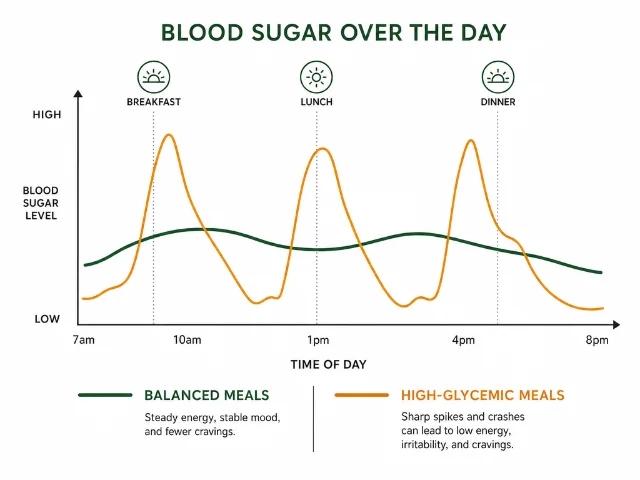
The fix is not willpower. It's not "try harder to eat better." It's architecture — a simple structural framework that keeps blood sugar stable and brain chemistry steady throughout the working day, with no meal prep required. Research on dietary glycemic patterns shows that high-glycemic meals reliably increase post-meal fatigue and reduce cognitive alertness in the hours after eating 1.
🧠 The daily framework: stop riding the energy roller coaster
The biggest driver of the afternoon crash is not how much you eat — it's when you eat and what you combine. Skipping breakfast or waiting until noon creates a blood sugar trough that your body compensates for with cortisol. By the time you hit your first real meal, you're behind on focus, not just fuel.
A more effective structure looks like this:
- 7–9 AM — anchor breakfast: Protein + slow-release carbs to establish a stable glucose baseline for the morning. Think eggs on whole grain toast, or full-fat Greek yogurt with berries and a handful of walnuts. The goal: steady energy from the first meeting.
- 10–11 AM — optional bridge snack: Only if breakfast was light or your morning runs long. A small protein-forward snack prevents the pre-lunch crash that makes mid-morning decisions feel harder than they should.
- 12:30–1:30 PM — functional lunch: Prioritize protein and fiber over convenience. Salads with grilled protein, whole grain bowls, or legume-based meals maintain alertness through the afternoon without triggering the post-meal sedation that comes from refined-carb-heavy lunches.
- 3–4 PM — the strategic snack: This slot is where most professionals either win or lose their afternoon. Done right, it eliminates the 2–4 PM crash entirely. Done wrong (vending machine, leftover birthday cake, another coffee), it guarantees it.
- 6–8 PM — recovery dinner: Lighter than many Americans eat. The evening is a recovery window, not a performance window — you don't need maximum fuel when your cognitive output is winding down.
The key insight: each eating window is a bridge to the next one. You are not eating for hunger; you are eating for the version of yourself who needs to be sharp in two hours.
⚡ The power snack formula: protein + fiber + healthy fats
The 3–4 PM snack slot is where structured nutrition makes its clearest, fastest impact. The formula is non-negotiable: you need all three components to work together.
Why all three?
- Protein slows gastric emptying and supports dopamine and norepinephrine production — the neurotransmitters behind focus and motivation 2.
- Fiber smooths glucose absorption, preventing the spike-and-crash cycle that makes you stare at your screen feeling vague 3.
- Healthy fats sustain satiety long enough to bridge to dinner without sending you back to the vending machine at 5 PM.
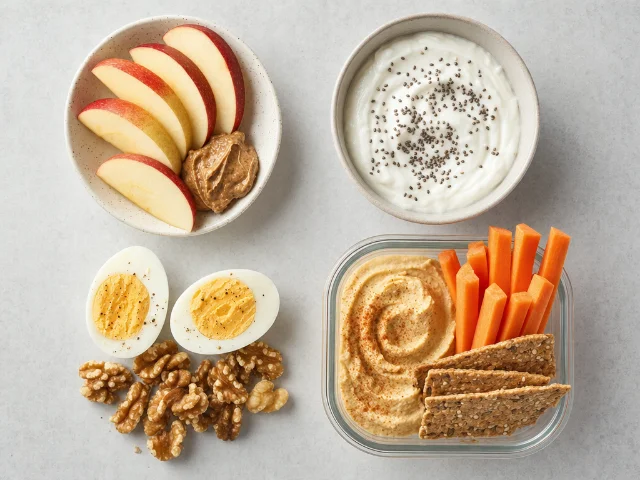
4 snacks that actually fit a workday:
| Snack | What's in it | Why it works |
|---|---|---|
| 🥑 Apple slices + almond butter | Fiber (apple), protein + fat (almond butter) | Takes 90 seconds, no refrigeration needed, delivers sustained satiety for 2–3 hours |
| Greek yogurt (plain, full-fat) + 1 tbsp chia seeds | 15–20g protein, significant fiber + omega-3 fat | Can be prepped in 30 seconds at the office; the fat content extends fullness significantly vs. low-fat versions |
| Hard-boiled eggs + a small handful of walnuts | 12–14g complete protein, monounsaturated fats, fiber from walnut skins | Can be prepped Sunday and stored all week; no afternoon fridge trip required |
| Hummus (2–3 tbsp) + raw veggies or whole grain crackers | Plant protein, fiber, olive oil fat base | Shelf-stable option, works well at a desk, no utensils needed |
The common thread: all four fit in a drawer, a bag, or a small office fridge. None of them require a kitchen, a recipe, or a lunch break.
✅ Actionable micro-habits: the zero-prep changes that compound
Evidence consistently shows that environment design outperforms intention. The professionals who eat well at work aren't the ones with the most self-discipline — they're the ones who've removed the decision from the moment. Here's where to start:
Start with your desk setup, not your diet:
- Keep one "default snack" in your bag or desk at all times. When the 3 PM decision point hits and you're context-switched into three meetings, the only snack that exists is the one already there. A single bag of mixed nuts covers protein + fat; pair it with any piece of fruit that happens to be nearby.
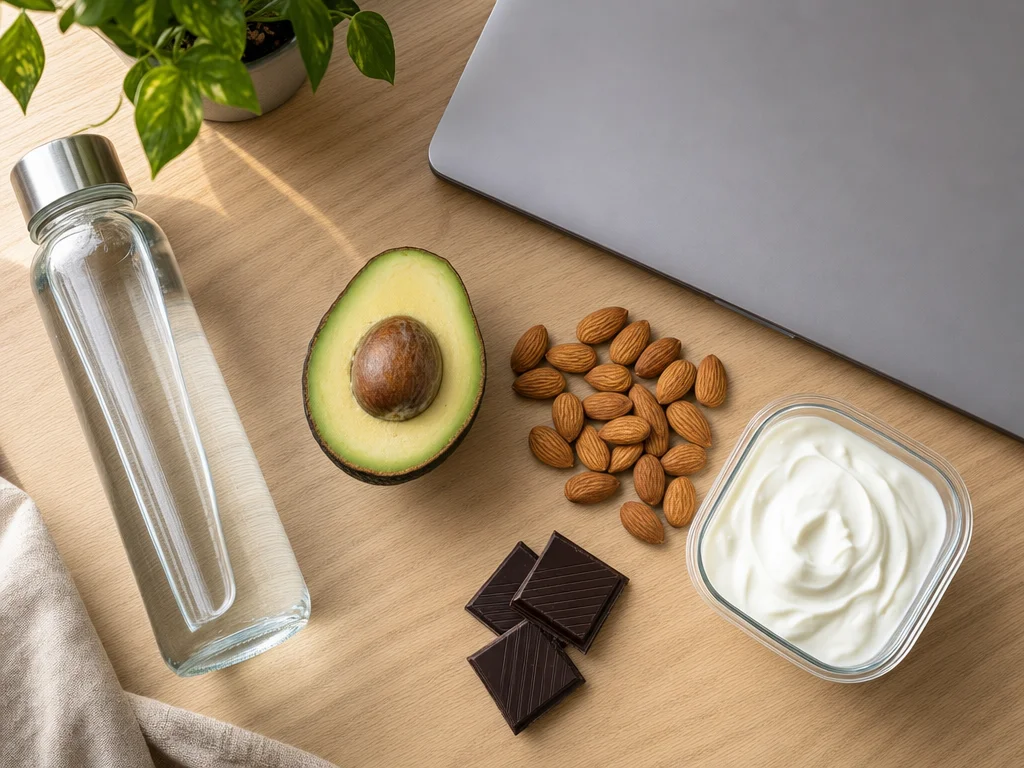
- Move water to the front of your desk. Mild dehydration (as little as 1–2% body water loss) measurably impairs short-term memory and attention 4. You likely feel this as mid-afternoon brain fog, not thirst. Keeping a full water bottle visible is one of the highest-leverage, lowest-cost interventions available.
Reframe your lunch order:
- When ordering lunch, apply the "half-plate heuristic" — ensure at least half the plate is vegetables or legumes before adding anything else. This single habit changes the carb-to-fiber ratio of almost any restaurant or delivery meal without requiring you to order differently from your team.
- Choose a protein anchors first. Before deciding anything else about a meal, identify the protein source. This single decision point — picking the protein first — cascades into better choices on every other component.
Manage the afternoon caffeine trap:
- Caffeine has a half-life of approximately 5–7 hours in most adults 5. A 3 PM coffee means half of that caffeine is still circulating at 8–10 PM, which disrupts sleep architecture even if you fall asleep normally. Poor sleep quality directly degrades next-day cognitive performance — creating the very brain fog you drank the coffee to avoid. The goal is not to eliminate caffeine; it's to front-load it before noon and use a proper snack to manage the afternoon energy window instead.
None of these changes require shopping differently, cooking more, or spending extra time. They require placing the right thing in the right place before the high-friction decision point arrives.
The bottom line: peak cognitive performance at work is not reserved for people with perfect diets or unlimited time. It comes from a small number of structural decisions — the right combination at the right time — made once, so you don't have to make them again under pressure.
What's your go-to snack that actually keeps you sharp through the afternoon? Drop it below — I'm genuinely curious what's working in real offices right now, and what combinations I haven't tried yet.
Add more perspectives or context around this Post.